Commercial construction, weather days, written proof

Prove the weather day before your crew leaves the gate

RainDelayLog stamps each lost hour with the reading from the reporting station that governs your contract, then keeps it in a packet the owner's rep can check line by line. Your superintendent files from the truck in about ninety seconds, and the time extension file assembles itself while the site dries out.

1,180 job sites Active on commercial work in 38 states
2,043 stations NWS reporting points wired to live jobs
One afternoon From contract upload to first logged day
Superintendent in a hard hat and reflective vest writing a site log on a rugged tablet during rain at a commercial construction site
Wednesday, 7:12 a.m. Standing water on the mud slab, deck pour called off.
1.12” Recorded 24 hr
Station KBNA
01 The cost of a wet week

Rain does not break schedules. Thin paperwork does.

Nobody argues that it poured on the fourteenth. The fight starts three months later, when the owner's scheduler asks which activities were on the critical path that morning, who was standing down, and where the number in your notice came from.

The notice window shuts fast

Most commercial contracts give you 7 to 21 days to put written notice of a weather delay in front of the owner. A super running two towers forgets a Tuesday in March, and that day is gone even though the gauge agrees with him.

$2,500 per day in liquidated damages

Three words on a daily report

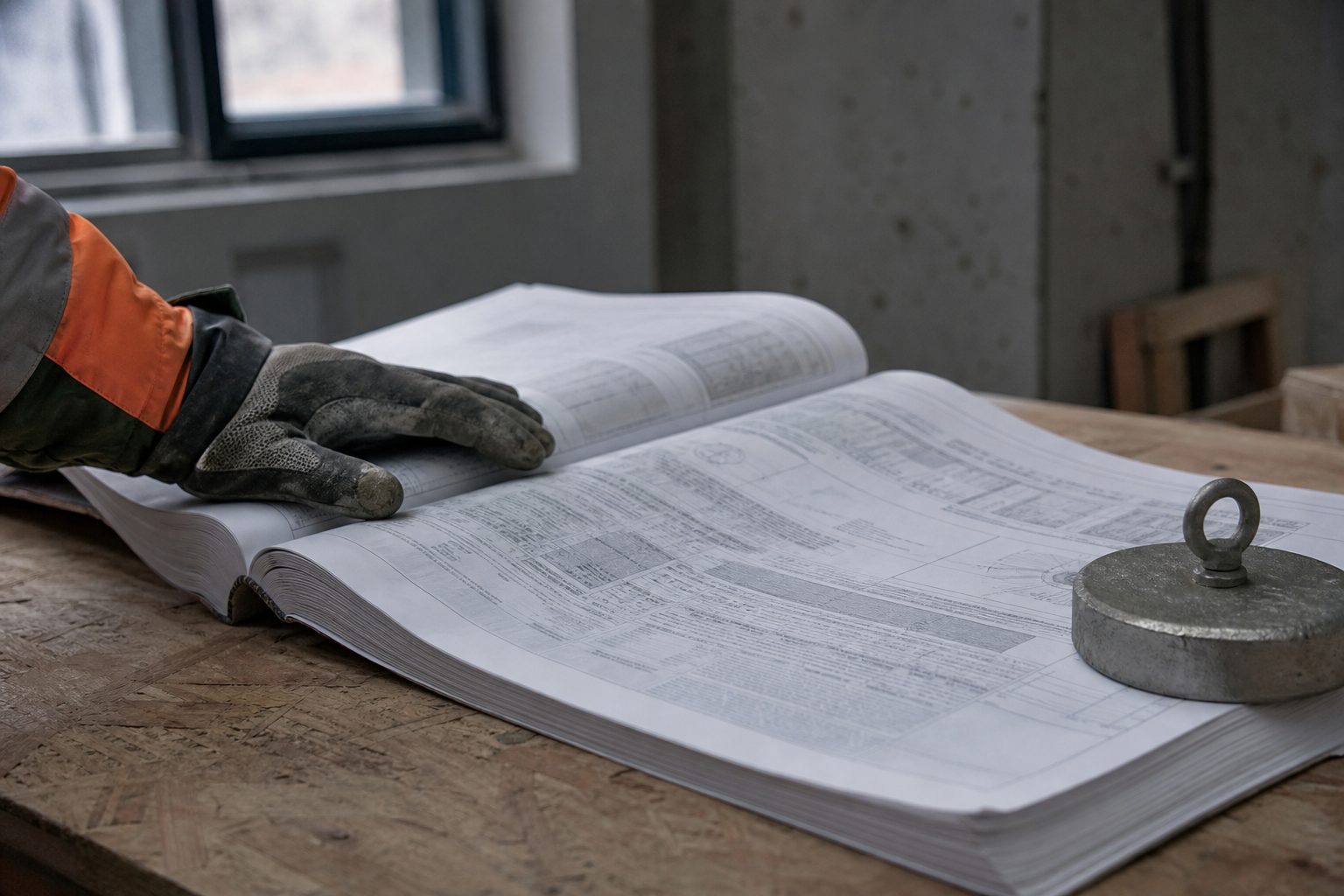
"Rain, no work" is what most daily logs carry, and it does not survive a claim review. Without crew counts, idle equipment hours and the activity IDs that got hit, the reviewer has nothing to approve.

19 of 24 days rejected on one review

The baseline argument

The owner says a wet April is normal in that county, so those days were already inside your schedule. You need the ten year normals and the actual totals side by side, on the day you file, not from memory in a deposition.

11 days written off in a single meeting

Rebuilding history in arrears

When the claim is finally assembled, a project engineer spends days pulling texts, camera stills and a legal pad into one story. The hours are real, the record is thin, and the schedule analyst still has gaps to explain.

11 hours a month of engineer time
02 How a weather day gets documented

Four steps, from the gate to the claim file

The whole method fits in the ten minutes your superintendent already spends on the daily report. Nothing in it asks the field to become a scheduler.

Bind the job to its weather authority

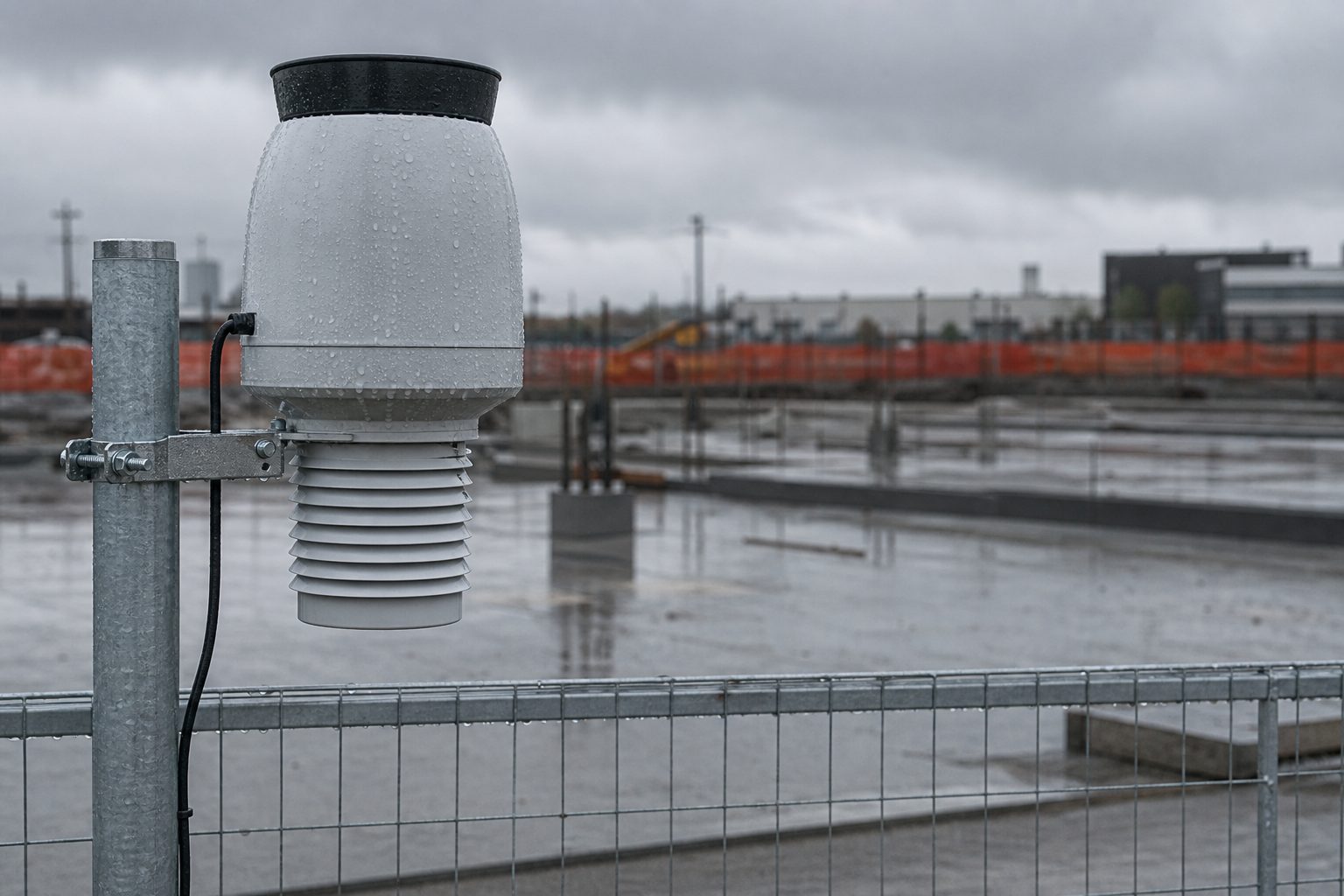
Drop the pin on the site, and RainDelayLog picks the nearest National Weather Service ASOS or AWOS station along with the county rainfall normals for the last ten years. If your contract names a specific station or an on site gauge, that source governs instead.

Setup: about 20 minutes per job

Log the day from the field

The super answers what stopped, which crews stood down, which equipment sat idle and which scheduled activities took the hit. Photos carry a timestamp and coordinates, and the whole entry closes in a minute and a half on a phone in a wet glove.

Field time: 90 seconds a day

Threshold rules make the call

Your rules decide what counts: precipitation over 0.10 inches, sustained wind above 25 mph for crane picks, a 7 a.m. reading under 32 degrees for masonry, or a dry out day after saturated subgrade. Each rule cites the contract clause it came from, so the classification is never a matter of opinion.

Rules run per activity, not per job

Export the delay packet

One button produces a PDF with hourly station data, the normals comparison, signed daily logs, geotagged photos and the affected activity IDs pulled from Primavera P6 or Microsoft Project. A CSV of the same record goes to your scheduler for the time impact analysis.

Median build time: 9 minutes
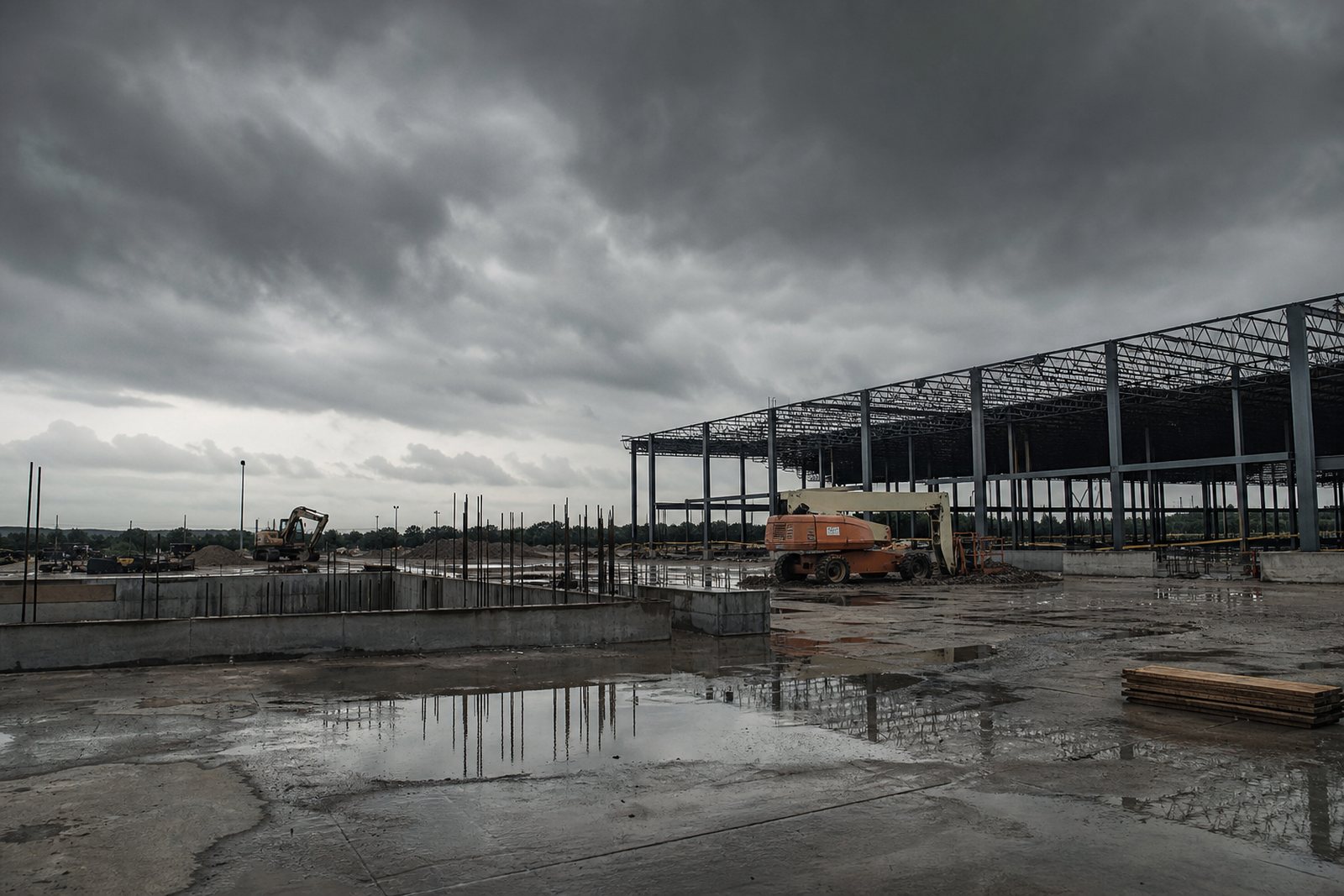
Commercial construction site under heavy grey clouds with standing water on poured concrete and idle equipment
A shut down morning is evidence. It only needs to be written down while it is happening.
03 What is in the box

Built for the way a superintendent actually works

Every part of this product exists because a delay claim got trimmed for a reason that could have been prevented on the morning it happened.

Station binding and hourly pull

Each job is tied to the reporting station your contract recognizes, and the hourly record is pulled and archived every night whether anyone logs in or not. When a claim is reviewed two years later, the raw observations are still sitting under the day.

Dry out and carryover days

The rain stops at midnight and the subgrade is still soup at 6 a.m., which is the day owners contest hardest. Carryover rules record the saturation condition, the equipment that could not move and the trade that had to stand down.

Threshold rules per activity

Concrete, steel erection, roofing and earthwork do not stop at the same number, so they do not share a rule. You set the trigger for each activity type once, and the log classifies the day the moment the reading crosses it.

Ten year normals on the page

Every month shows actual precipitation against the ten year average for that county, printed on the same sheet as your logged days. The conversation about what counts as an abnormal month gets settled with a chart instead of a raised voice.

Photo and crew evidence chain

Photos land with coordinates, a timestamp and the entry they belong to, and nobody can quietly change them afterward. Crew headcount, idle equipment hours and the foreman signature ride along in the same record.

Notice clock and packet export

The contract notice period is stored per job, so the countdown for each weather day is visible to the whole project team. When you send, the packet, the recipients and the delivery time are recorded as part of the file.

04 What the record is worth

Numbers from jobs running on this log

Figures below come from 2025 customer reporting across 1,180 active job sites. They are averages, not the best case we could find.

31 weather days granted on one hospital job

A 14 month patient tower in central Florida logged every qualifying day from notice to proceed. The owner approved 31 of the 34 days submitted, because each one arrived with station data attached rather than a memo written after the fact.

94 percent approved on the first pass

Across 2,140 weather days filed last year, 94 percent were accepted without a second submission. The packet answers the reviewer's usual three questions before the reviewer asks them.

9 minutes to assemble a claim packet

What used to be two days of digging through camera archives and text threads is now an export. The median packet covering a full month of weather days is built in 9 minutes.

11 hours a month back for project engineers

Project engineers stop reconstructing history and start reviewing it. Customers report an average of 11 hours a month per job returned to submittals, RFIs and the work that moves the schedule forward.

05 From the field

Supers and project executives who stopped guessing

Three customers agreed to put their names on the record. All three run commercial work where a lost calendar day carries a price.

"We got hit with 26 days of rain over a summer on a distribution center and the owner pushed back on nearly all of it. I pulled the packets, sent them Friday, and had 24 days approved by the following Wednesday. Before this we were arguing from my truck notes."

Dale Whitmore Senior Superintendent, Halbrook Builders, Tampa, Florida

"My scheduler used to ask for the weather backup and I would wince. Now the activity IDs are already in the export, so the time impact analysis takes an afternoon instead of a week. The normals chart ended a fight with an owner's rep in about four minutes."

Marisol Vega Project Executive, Ridgeline Commercial Group, Denver, Colorado

"Ninety seconds on a phone with wet gloves, that is the whole ask. My guys do it because it is shorter than the text message they used to send me. The notice countdown on the dashboard is what keeps me from losing a day to my own memory."

Terrance Boyd General Superintendent, Kestrel Construction Partners, Kansas City, Missouri
2,140 Weather days documented across the customer base in 2025
38 States with active commercial jobs logging daily
$4.1M Liquidated damages exposure closed out by approved extensions
06 Plans and pricing

Priced per job, not per hard hat

Every person on the project can log a day at no extra cost, because a record with gaps in it is not worth defending. You pay for the jobs you are running this month.

One active job

Single Site

$59 per month, per active job site
  • Unlimited daily logs and unlimited users on the job
  • One bound National Weather Service station with nightly hourly archiving
  • County normals for the last ten years, printed with every export
  • Threshold rules for eight standard activity types
  • Delay packets in PDF and CSV, unlimited exports
  • Seven year record retention after the job closes out
Request a demo
Recommended for most general contractors

Multi Site

$149 per month, up to 10 active job sites
  • Everything in Single Site, across your whole active board
  • Portfolio view with the notice countdown for every open weather day
  • Procore and Autodesk Construction Cloud daily log sync
  • Custom threshold rules written against your contract clauses
  • Primavera P6 and Microsoft Project activity ID mapping
  • On site gauge and gateway readings accepted as a governing source
  • Two hour onboarding session for your supers and project engineers
Request a demo
Unlimited jobs

Enterprise Site

$349 per month, unlimited active job sites
  • Everything in Multi Site with no cap on open jobs
  • Single sign on with Okta, Entra ID or Google Workspace
  • Read and write API plus scheduled exports to your data warehouse
  • Standard operating procedure templates written with your risk manager
  • Claim support: our team joins the call when a packet is challenged
  • Named account manager and a four hour response commitment
Request a quote

Every plan is billed monthly in US dollars and can be cancelled at any time from the account screen, with no term commitment and no exit fee. Cancel mid month and the jobs stay readable through the end of the paid period, and your exports remain downloadable. Prices are per company, not per user, and a job that closes out stops counting against your active total on the day you archive it.

07 Straight answers

Questions we get on the first call

If your question is not here, ask it in the form below and you will get a written answer from a person who has read your contract language.

The Weather Day

The magazine for people who log weather days

The Weather Day is written for superintendents, project engineers and schedulers on US commercial job sites. It covers how a claim package is assembled, what the notice clause actually asks of you, and what a wet week costs when the record is thin.

Read every article in The Weather Day

08 Talk to us

Bring your worst weather month and we will log it back

Send the dates of a stretch that cost you time, and we will rebuild it in the product on a shared screen using the station that governs that job. Most calls run 25 minutes, and you leave with the packet whether you buy or not.