Tuesday at midnight: the rain stops and the argument starts
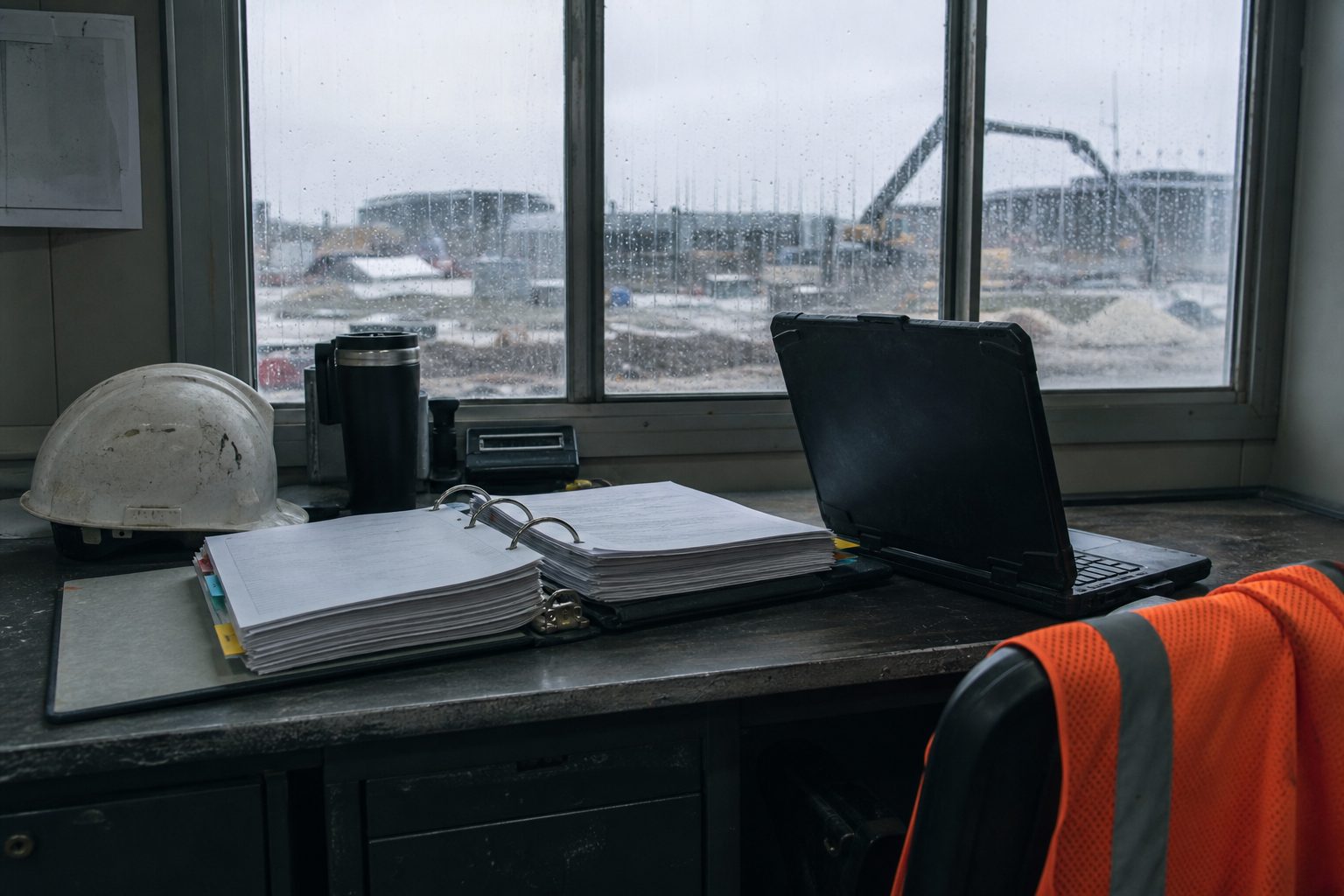
The rain fell hard for nine hours straight, pinging off iron and saturating the subgrade. By midnight, the worst was over. The forecast said clear skies for the rest of the week. For the office and the schedule, this should have been a relief. For the field crew, it was the start of a different problem.
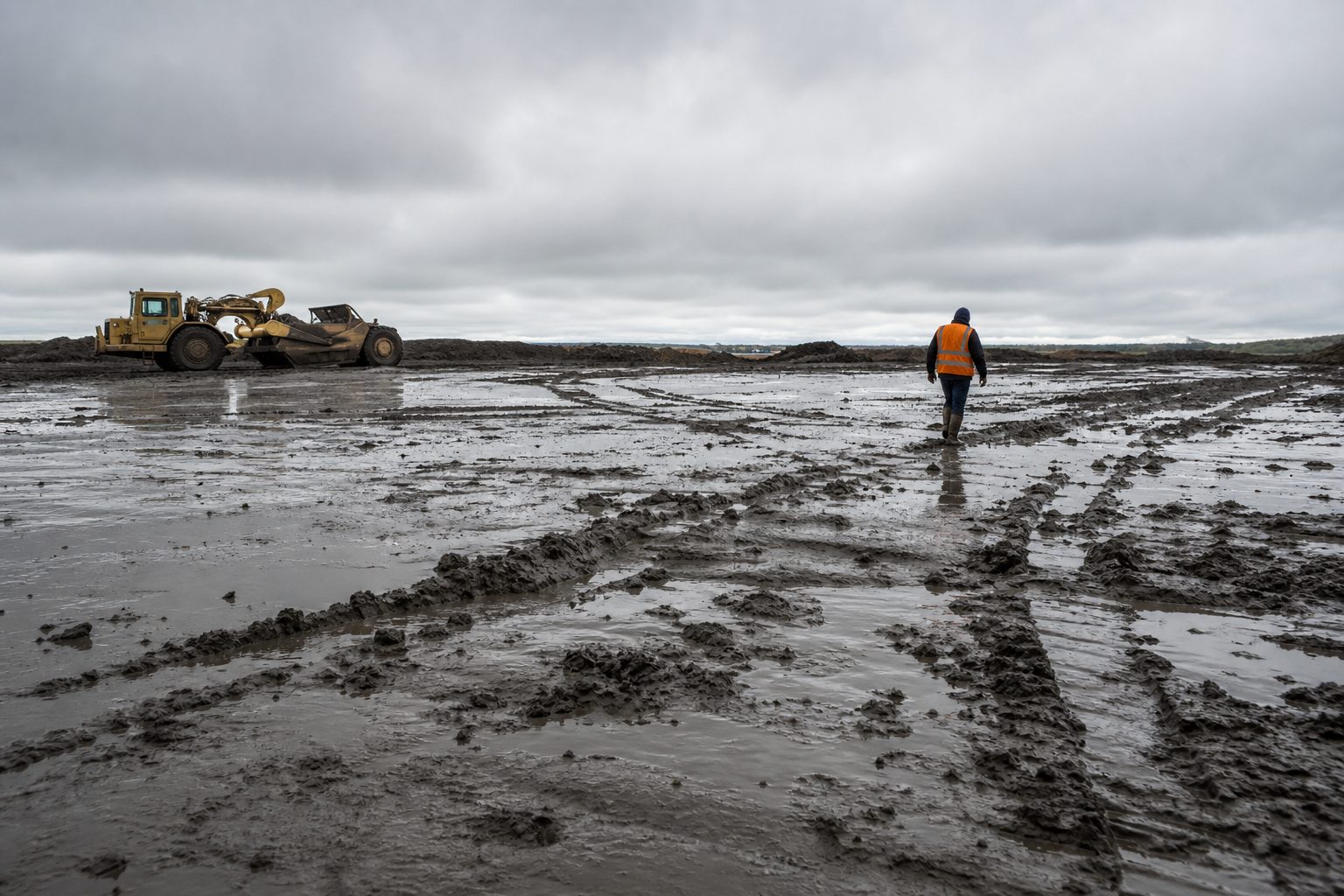
The project was a 120,000-square-foot tilt-up warehouse in the central valley. The GC had the pad rough-graded and ready for the next lift. Tuesday's plan was to finish compaction and get the geotech's green light by noon, then let the concrete sub start forming. But as the sky cleared, water pooled in tire ruts and low spots, spreading in dark patches across the site. The subgrade looked passable from the trailer, but everyone knew better.
By 12:30 a.m., the superintendent was on the phone with the earthwork foreman. They both knew the soil had a high clay content. It would not take a scraper or even a roller until it dried out. Would a half day be enough? Could they work one end of the pad if the other was still soup? The argument started there, and it would not end for another forty-eight hours.
Keep reading: How to Assemble a Weather Delay Claim Package, Section by Section
Walking the pad at 6 a.m. with a probe, a boot and a camera
The sun rose on a site that looked deceptively firm. By 6 a.m., the foreman was out walking the pad. He carried a standard proof rod, a tape measure, and his phone for photos. He walked the length of the building, checking low spots and the haul road. Each step was a test for suction and slip.
He pushed the probe twelve inches into the surface. In some places, it sank easily past eight inches. In others, the crust was firmer, but the boot test did not lie: mud stuck to the sole and water seeped around the edges. The foreman photographed the worst spots, making sure the time and date were visible on the phone. He shot video, narrating as the probe slid in. These records would matter for the delay claim that was already in the making.
At 6:20 a.m., he called the superintendent with a field report: "Still too wet to run anything heavier than a quad, and the eastern end is a lake." The conversation was short. The dirt crew would stand down. The clock started ticking for the dry out day.
Why the compaction test decides the day, not the sky
The decision to delay could not be based on the forecast or the color of the clouds. The geotechnical engineer's compaction test would determine when the crew could go back to work. For this job, the specification called for ninety-five percent minimum compaction at the required moisture content, tested every five thousand square feet.
By mid-morning, the superintendent called the testing lab. The field tech arrived at 10:30 a.m. and set up the nuclear gauge. The first readings on the northwest corner showed moisture content two points above optimum and density well below target. The tech took four more readings across the pad, with similar results. The ground looked crusty but was unstable underneath. Even a light roller would have left ruts and mashed the surface below grade.
The tech issued a verbal fail for density and moisture. The formal report would follow by email. The superintendent noted the time and location of each test. The day was officially lost to wet subgrade, and the paper trail began to build.
Keep reading: Weather Delay Notice Rules in AIA A201, ConsensusDocs and FAR
Equipment that could not move and what it billed anyway
With the site shut down for earthwork, the iron sat idle. Two scrapers, a D6 dozer, and a padfoot roller were staged along the north haul road. The equipment rental company charged by the day, not by the hour. So did the owner-operator on the scraper. The crew was clocked out except for one laborer who stayed to pump standing water from the southeast corner, using a tow-behind trash pump and a generator.
The foreman filled out the field log by noon, noting each machine, its hours, and its location. He took photos of the idle equipment. These images would back up the claim that the machines were on site and ready, but could not be used. Some GCs do not pay for standby, but the contract on this job allowed billing for the equipment as long as it was held on site by owner direction or weather delay. Every hour counted. The superintendent reviewed the log, initialed it, and filed it with the daily report.
Later that week, when reviewing costs, the project manager calculated that just two days of idle equipment amounted to more than a week of labor for a mid-size crew. The numbers added up fast, even with no one turning a wheel.
The trades stacked behind the earthwork crew that also stood down
Earthwork delays cascade. The forming crew had planned to start layout on Tuesday afternoon. The underground plumber was scheduled for Thursday morning, but needed the pad at grade and compacted. The concrete supplier had two pours tentatively booked for Friday and Saturday.
By noon on the dry out day, the superintendent was on the phone rescheduling each trade. The forming contractor moved another crew to a different site. The plumber called his next job to see if he could move up. The ready-mix supplier put the batch orders on standby and warned that the next window would be tight.
For every dry out day, at least two or three other subcontractors lost part of a shift or had to rearrange their own schedules. On this job, the project manager kept a rolling list of every trade affected by the delay. He made sure to document each conversation, email, and call. When it came time to settle costs, these records would show that the earthwork crew was not the only one standing still.
See how RainDelayLog handles this for commercial construction
How the second dry out day had to be justified differently
Wednesday dawned clear and breezy. The hope was that a full day of sun and wind would pull enough moisture from the surface to allow compaction testing by afternoon. The field crew arrived at 7 a.m. and spread out across the pad with shovels, squeegees, and the trash pump. The laborer who had stayed late the day before had lowered the water table by several inches, but some depressions still held puddles. The foreman walked the site again, repeating the boot and probe tests. Conditions were better, but not by much.
There was pressure from above to try again. The GC's project manager asked if at least part of the pad could be worked. The foreman flagged three separate areas where the surface was firmer, but deeper probing showed soft material just below the crust. They marked the driest section and ran a light roller over fifty feet. The roller left a rut that measured almost four inches deep. Photos were taken of the roller tracks, the probe tests, and the standing water still present in shaded spots.
At 11:00 a.m., the geotech arrived for a new round of compaction tests. The results were better than Tuesday, but the moisture content was still borderline and the density was not consistent. The field tech advised waiting until Thursday morning for a retest. The superintendent documented the roller test, the field tech's verbal report, and the photos from the morning walk. This time, the justification for the second dry out day relied more on observed field conditions and less on lab numbers. Every hour was tracked, with the goal of proving that no reasonable work could be started without risking rework or failed inspections.
What the owner's representative asked for, and what settled it
By Thursday morning, the site was finally ready for the compaction test. The subgrade passed on the first try, and crews got to work. The real argument was now over paperwork. The owner's representative reviewed the delay claim, which included two full dry out days. He wanted proof that the pad truly could not be worked and that the lost time was unavoidable.
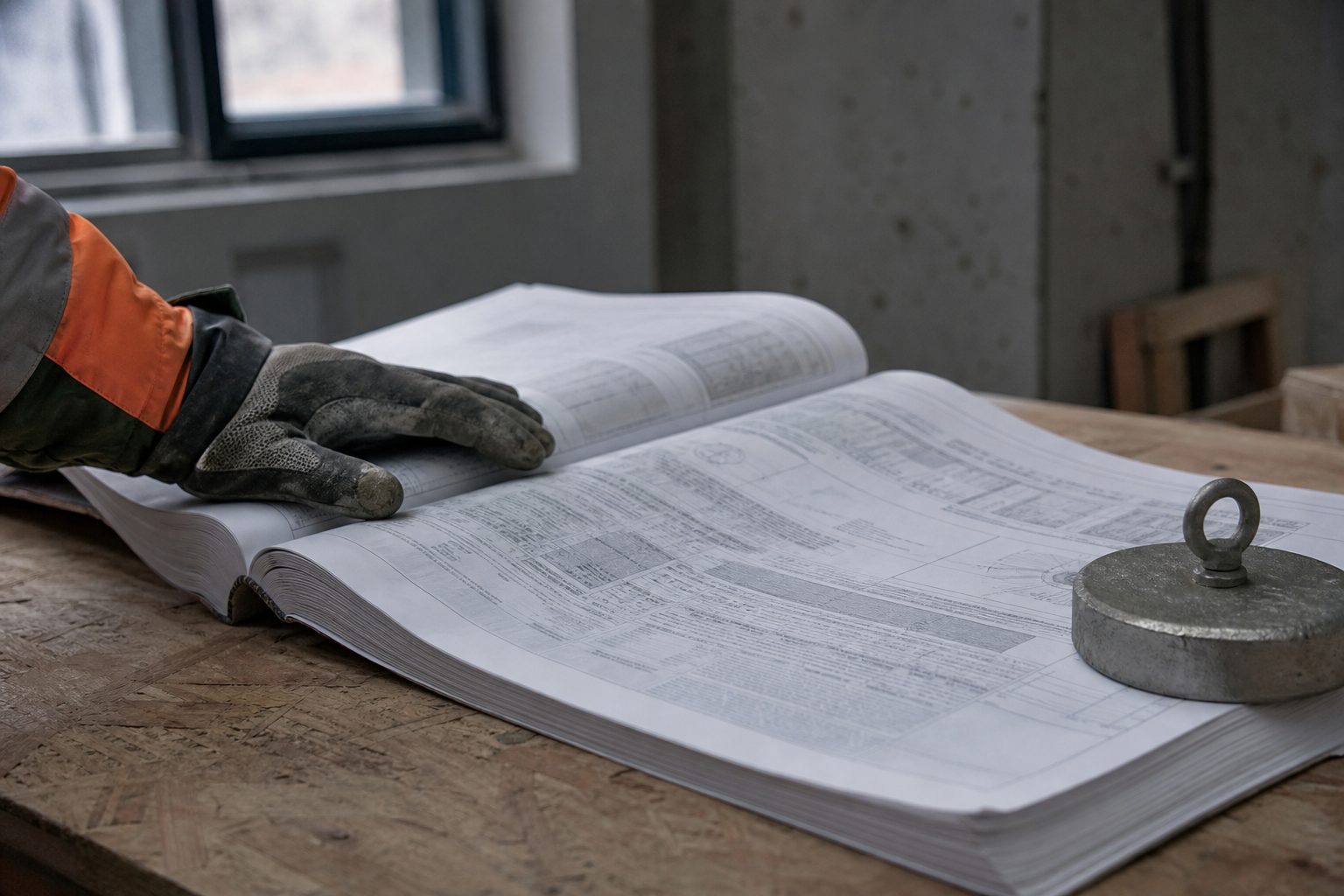
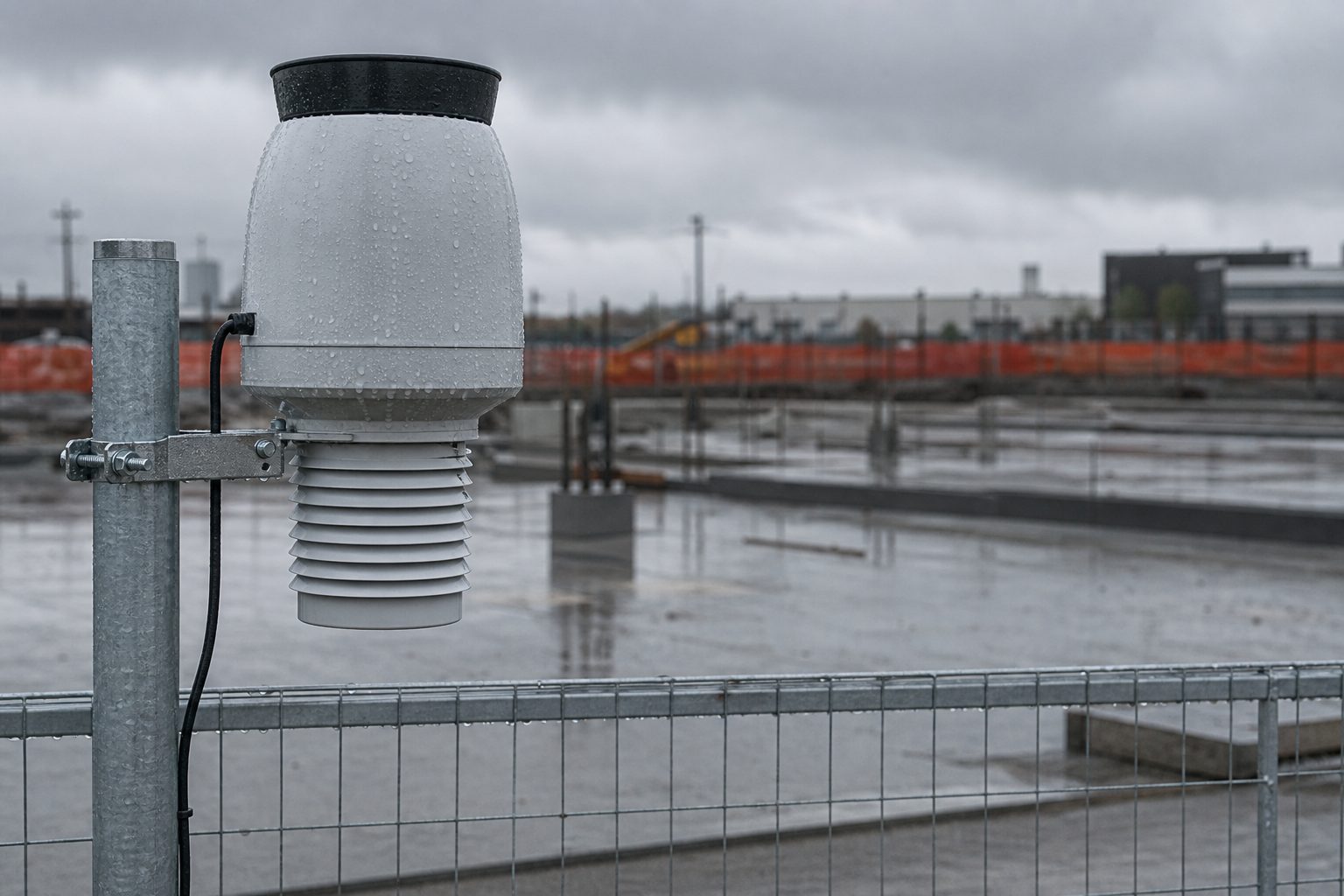
The rep asked for a record of on-site weather conditions, not just the forecast or local airport data. He wanted to see evidence of the field testing, including photos and timestamps. He reviewed the field logs for equipment standby and checked the contract language for allowable costs. The GC provided a packet with the following: daily weather readings from a portable station, annotated photos of the pad, probe and roller test results, copies of the compaction test reports, and the full communication log between the trades.
What settled the claim was the completeness and credibility of the documentation. The owner's representative saw that every hour was tracked and every test was dated. The dry out days were accepted as legitimate, and the delay costs were approved for payment. In the end, the critical detail was not the rainfall total, but the way the crew documented every failed attempt to resume work, every equipment standby hour, and every call made to the trades stacked behind them.
Tools that automate daily site logs and capture real-time weather conditions now make this process more reliable. When those records are bundled into defensible documentation packets, a superintendent can settle dry out day claims faster and with fewer disputes. That is what RainDelayLog is designed to deliver.