The job, the contract form and the notice window it carried
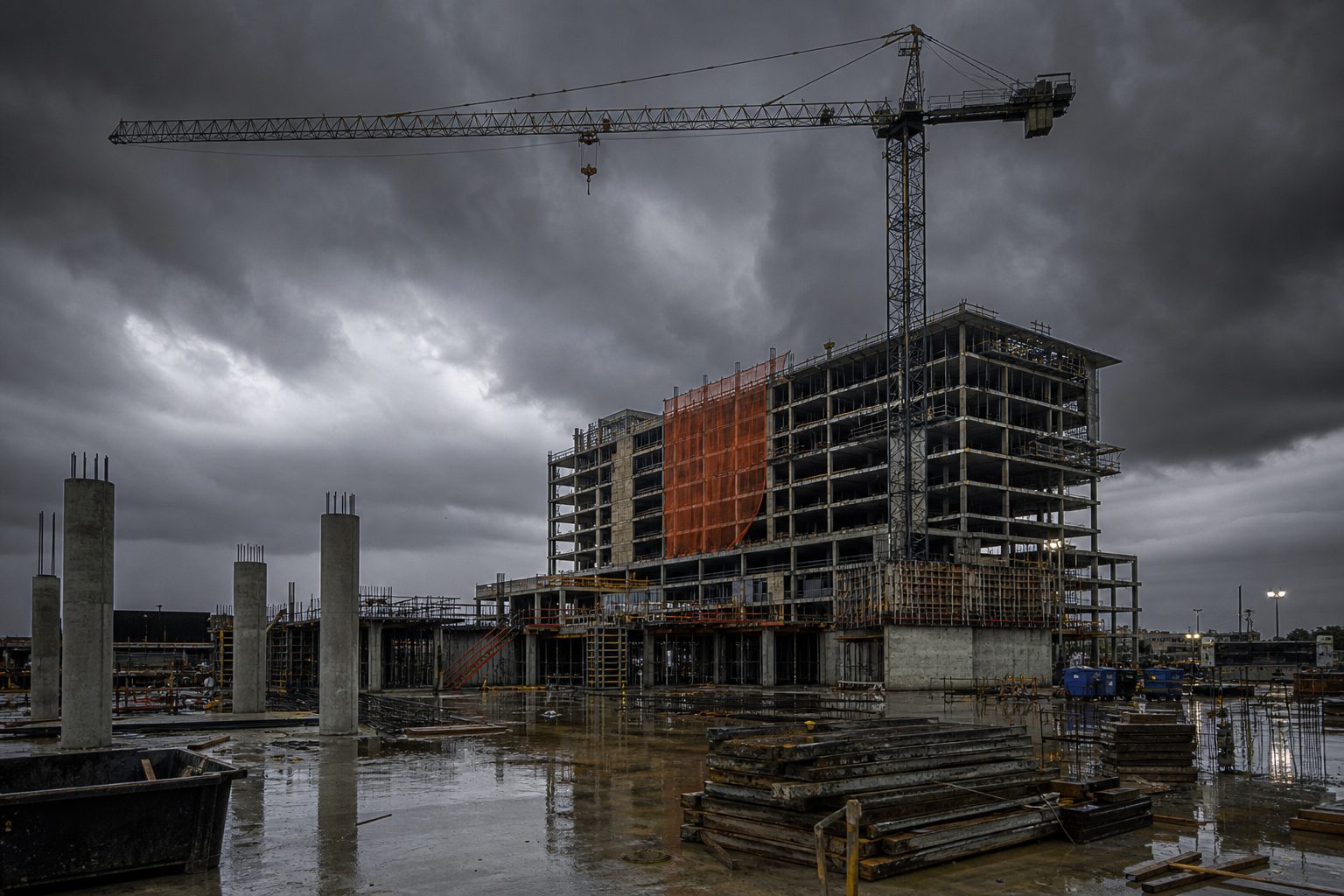
The project was a new patient tower at a central Florida hospital, started under a fixed-price contract that ran fourteen months from notice to proceed. The general contractor faced a tight schedule, with substantial completion tied to liquidated damages. The contract used the standard AIA A201 framework, with custom supplements from the owner's legal team. Weather delay claims had to be submitted on a rolling basis, but the contract allowed them to be grouped by calendar month for review.
The notice window was five days after a potential delay event, per the A201 language. The superintendent kept a running log but knew that missing the window for even one day could cost the team extra work, or worse, lost days. The contract also made it clear: only weather days that could be shown to exceed the "normal" for the region would count, and each request had to be backed by site-specific data, not just regional weather reports.
Keep reading: Named Stations and Weather Day Tables in Newer Owner Contracts
Binding the site to the reporting station the contract recognized
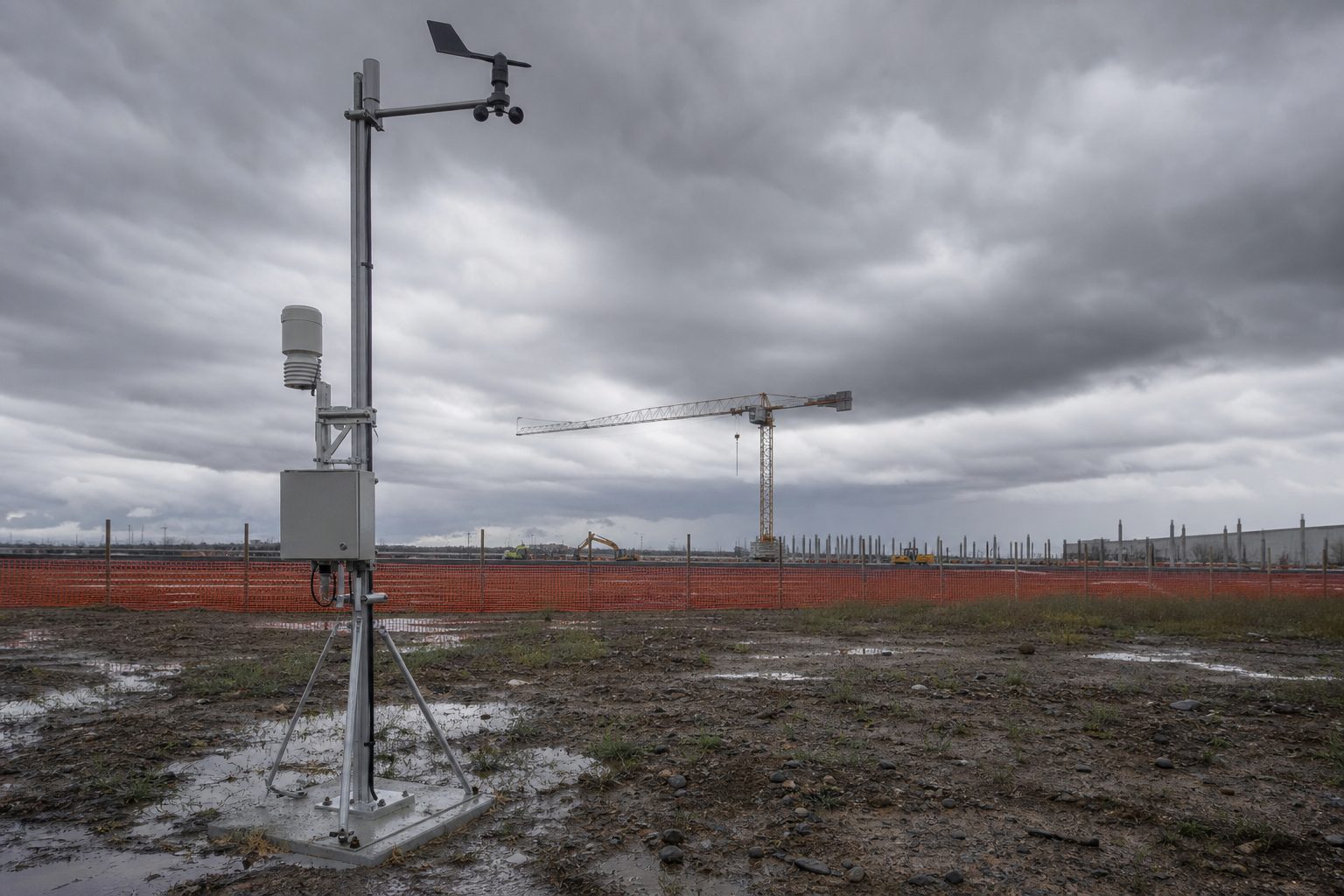
The owner's team specified a National Weather Service station about four miles from the job site. This was written into the contract exhibits as the reference point for rainfall, wind, and temperature. The superintendent and project manager checked the contract twice to make sure there was no room for alternate sources, the official log had to follow this station, not the airport or any private weather app.
To build their record, the contractor set up a process at the start of the job. Each morning, the project engineer downloaded the previous day's hourly readings from the named station. This became a standing part of the daily report, with hard copies filed in the project office. The log included temperature, precipitation, and wind speed, with notes on how each value lined up with the trade-specific thresholds written into the schedule.
Threshold rules written separately for concrete, steel and roofing
The contract distinguished between weather-sensitive activities. Concrete placements could be delayed by rainfall over a quarter inch, wind gusts above a certain speed, or temperatures below 40 degrees Fahrenheit. Steel erection had its own rules: sustained winds above twenty-five miles per hour triggered a work stoppage, as did lightning within ten miles. Roofing work, crucial in the second half of the project, was suspended for any measurable rain or when wind advisories were issued in the county.
Each threshold was listed in a matrix attached to the schedule. The superintendent and trade foremen reviewed these before mobilizing each phase. During planning meetings, the team flagged days when the forecast approached a threshold, knowing that documentation would be critical if the owner's rep later challenged a delay claim.
Keep reading: Dry Out Days: What Saturated Subgrade Costs an Earthwork Crew
What a logged day looked like during a summer afternoon storm
Summer weather in central Florida is notorious for fast-moving, high-intensity storms. On a typical claimed day, the log showed clear conditions until about 2:00 PM, followed by a sharp rain event and gusty winds. The project engineer pulled the hourly data, highlighting a spike of 0.38 inches of rainfall between 2:00 and 3:00 PM, with wind gusts topping thirty miles per hour and a brief lightning alert issued by the county.
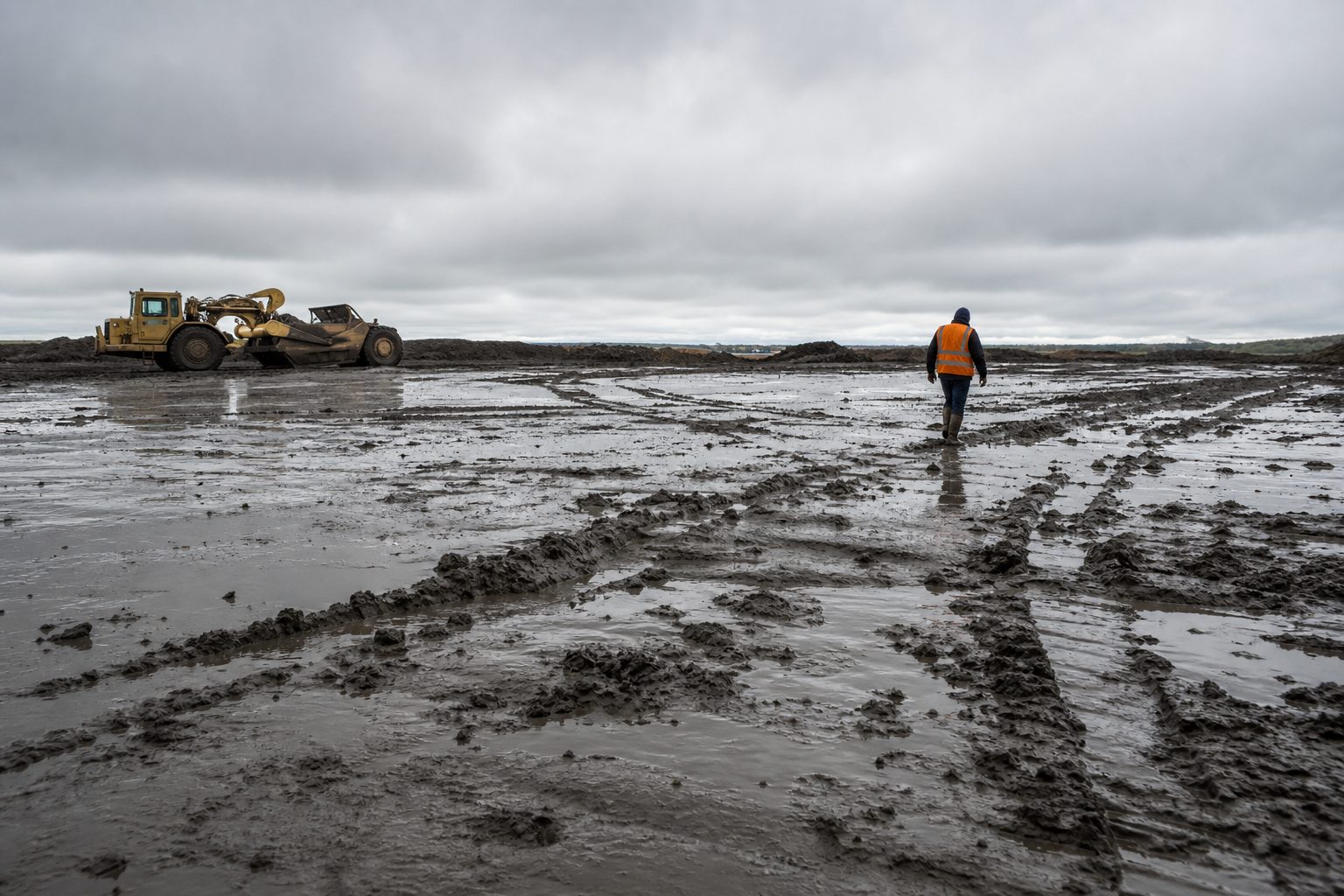
The field report for that day included photos of standing water around the pour zones and a note that concrete work stopped at 1:45 PM when the first thunder was heard. The ironworkers' foreman added a short note: "No picks after 2:10 PM due to wind and lightning." The roofing sub's log entry read simply, "Tarped at 2:15 PM: weather delay."
By 4:30 PM the site was safe to re-enter, but the day's critical path work could not be recovered. The superintendent attached the weather station's printout to that day's log, with a cross-reference to the contract's threshold chart. Every claimed day followed this pattern, one sheet with weather data, crew notes, and a link to the relevant threshold.
The three days the owner struck and the reason given for each
During review, the owner's project manager accepted thirty-one of the thirty-four submitted days without much debate. Three were challenged. In each case, the reason was tied to the contract's thresholds or the impact on the critical path.
The first rejected day: rain below the threshold
The first struck day was in early August. The log showed 0.18 inches of rain, but the threshold for delaying concrete was 0.25 inches. The owner argued that the rain, while inconvenient, should not have stopped work under the contract's standard. The superintendent noted that some areas were slick, but could not show that the threshold was met. The day was removed from the claim.
The second rejected day: non-critical work impacted
The second challenged day involved steel erection that was already behind schedule. The weather report documented a wind advisory, but the work stopped was not on the critical path. The owner's scheduler pointed out that the delay did not affect the project's completion date, so the weather claim did not qualify. The team accepted this, marking the work as out-of-sequence but not justifying a time extension.
The third rejected day: incomplete documentation
The last struck day was in September. The log was missing a foreman's note and the corresponding field photos. The owner's review team stated that without a clear link between the weather reading and a specific work stoppage, the claim could not stand. The superintendent tried to retrieve backup but could not reconstruct the missing details. This day was also removed from the packet.
See how RainDelayLog handles this for commercial construction
Submitting thirty four days as one package instead of thirty four memos
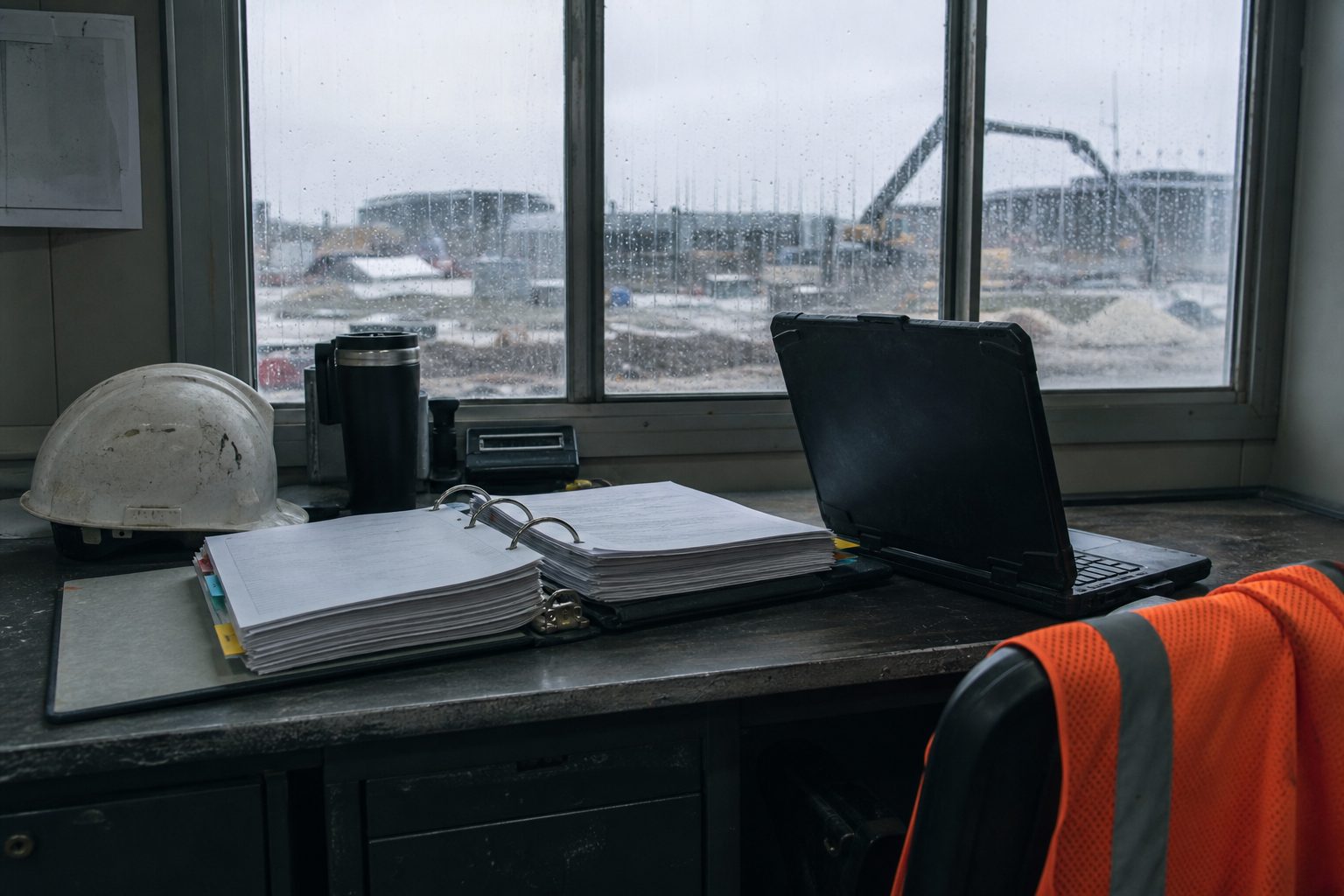
Rather than sending a separate memo for each claim event, the team compiled all thirty-four requested days into one indexed packet. Each day got its own section, with weather data, field notes, photos, and a summary sheet referencing the contract thresholds. The front page included a table of dates, weather events, affected trades, and claimed impacts.
This approach saved time for both sides. The owner's project manager could flip through the binder and spot any missing or weak documentation. When a question came up, the superintendent had the backup ready. By grouping the days, the team avoided repeat arguments and reduced the back-and-forth that often drags out weather claim reviews.
The packet was submitted electronically and as a printed binder. During the review meeting, the format allowed the group to deal with all claims in one sitting. The owner's rep commented that the package was "the cleanest weather claim" they had reviewed that year, and the approval process moved quickly.
What the granted extension was worth against the liquidated damages rate
The thirty-one approved weather days translated directly into a schedule extension. The contract's liquidated damages clause set the penalty at $6,000 per calendar day past substantial completion. Without the approved weather days, the contractor would have faced up to $186,000 in liquidated damages if the job finished late for uncontested weather reasons.
Instead, the schedule was officially extended by thirty-one days. The owner issued a change order reflecting the new completion date, and the general contractor's exposure to damages dropped accordingly. The project manager noted that, in previous jobs, delay claims with weaker documentation had led to drawn-out arguments and partial rejections, sometimes costing more in legal fees and staff time than the damages themselves.
By tying each approved day to both a contract threshold and a clear site impact, the team avoided disputes over "soft" delays. The owner's review team relied on the packet as a complete record, which kept final negotiations focused on just three days instead of every single claimed event.
What the team set up differently on the next tower
The success of the weather claim process shaped the contractor's approach for the next hospital project. The team made two key changes. First, they added a dedicated weather log tool that captured data automatically from the contract's named station. This reduced manual entry and the risk of missing data points, especially during back-to-back storm days.
Second, they trained each trade foreman to submit a daily note and photo whenever work was stopped or delayed by weather, tying every claim to a crew member's direct observation. This closed the documentation gap that cost them one of the three struck days in the previous project. The project manager also set a weekly review of the weather log with the owner's rep, catching any documentation issues early.
Projects with tight weather clauses and high daily damages require careful, defensible documentation. Tools that combine daily log entries with automatic weather station capture and secure delay packets make it easier to build the kind of record that stands up to review, and free up the team to focus on keeping the job moving when the weather clears.